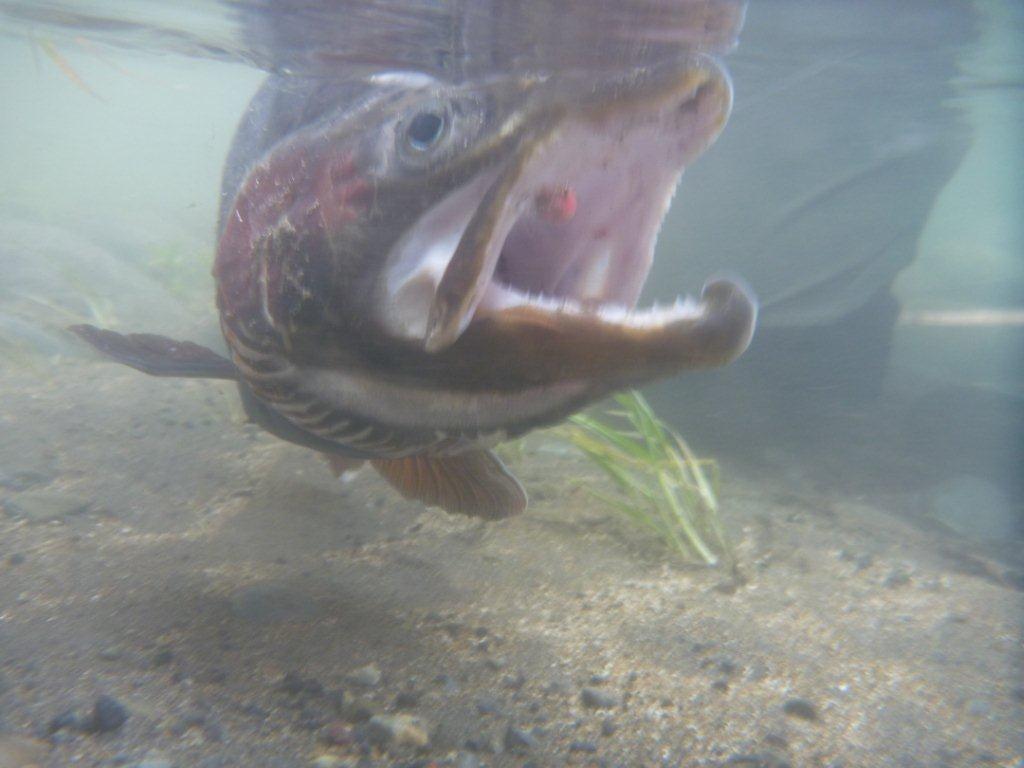
 Fly fishing began about 2000 years ago when Romans began first tried tying bird feathers and red wool onto their fish hooks. It’s developed a bit since then, but it still works on pretty much the same principles.
Without the benefit of bait to disguise the hook, fish typically spit out the tasteless fur and feathers on the fly as soon as they realise they’ve been duped – so the hook must be set immediately or the fish is lost. Total concentration is needed, so you can’t be thinking about work.
The leader material attached to the fly is also typically set below three kilos in breaking strength, so the trout can’t see it in the water, and a fish half this weight can easily break the leader by simply swimming away at a great speed or jumping into the air and then rolling, usually snapping the line. Fly fishermen have been known to cry a lot at times like this.
For every 100 fish that see a fly in or on the water, 50 may simply let it float past as the fly is not matching exactly what they are eating in terms of size, color, shape, or even the way it drifts.
Of the remaining 50 who may strike at the hook, about 40 could spit the hook before it is set and half the remaining ten may break the leader in the fight. If you’re landing five out of every 100 fish which see your fly, you’re doing pretty well and given these odds and the average size of trout, very few fly fishermen ever land a trout weighing more than ten pounds.
Hopefully the tips and tricks below will help you land a few.